Where does Bounty Box produce come from? Learn how ReFeed sources fresh fruits and vegetables from farms, wholesalers, and surplus supply chains.
One of the most common questions is simple:
“Where does the produce in a Bounty Box actually come from?”
The answer isn’t just one place — and that’s what makes it work.
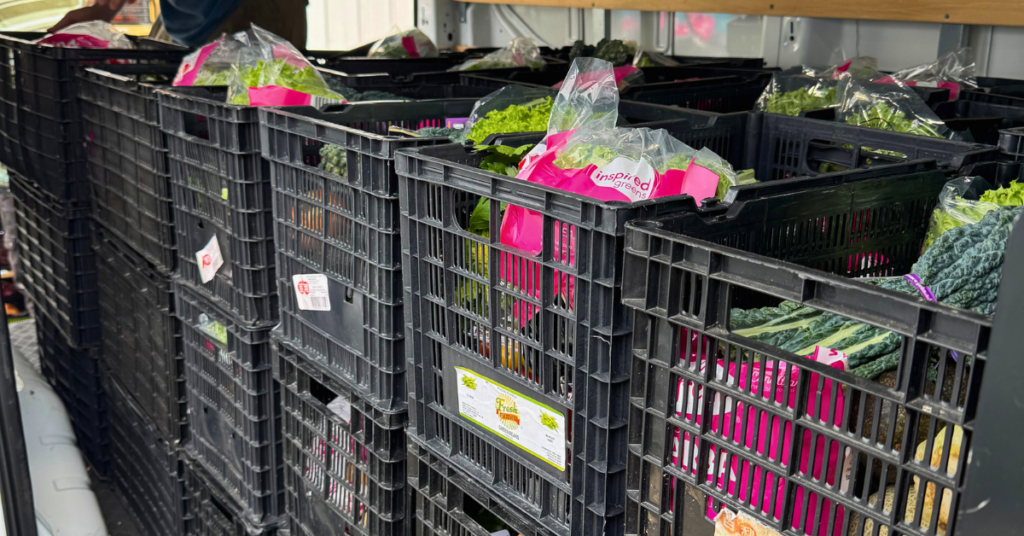
Instead of relying on a single supply chain like grocery stores, Bounty Boxes are built using multiple sourcing streams to keep quality high and costs low.
A portion of the produce comes directly from local growers.
This includes:
This helps support local agriculture while keeping produce fresher.
Wholesale markets move large volumes of produce every day.
Bounty Boxes tap into:
This is one of the key ways to keep pricing lower than traditional retail.
Not all produce gets sold — even when it’s perfectly good.
This includes:
Instead of going to waste, this food is redirected into Bounty Boxes.
Some produce doesn’t meet grocery store display standards.
That can mean:
But it’s still completely usable and high quality.
Because sourcing changes week to week, your box will too.
You might notice:
This isn’t inconsistency — it’s how the system creates value.
Most grocery stores rely on rigid supply chains that prioritize:
That system comes with:
By using multiple sources, Bounty Boxes can:
There’s a lot of confusion around this.
Not all produce in a Bounty Box is “rescued” — and that’s intentional.
The focus is:
This creates a more balanced and reliable system.
This approach allows Bounty Boxes to do three things at once:
It’s not about one source — it’s about using every viable source efficiently.
Your produce doesn’t come from just one place — and that’s the advantage.
By combining local farms, wholesale supply, surplus inventory, and imperfect produce, a Bounty Box creates a system that’s:
That’s how it delivers real value every week.